
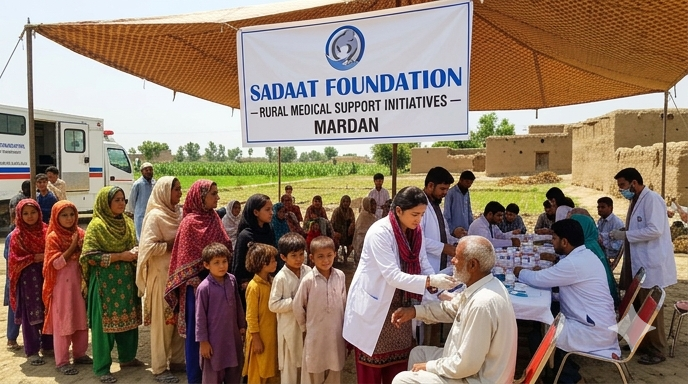
Rural medical support initiatives are critical in ensuring that underserved areas receive adequate healthcare services. In places like Mardan, Pakistan, where access to healthcare remains a major challenge, the role of non-governmental organizations and community-based efforts becomes indispensable. This blog explores the challenges in rural medical support and highlights how Sadaat Foundation is leading the way in transforming healthcare access for rural populations.
The Major Challenges in Rural Medical Support
Providing healthcare in rural areas, especially in places like Mardan, presents numerous challenges. These challenges are not only infrastructural but also socio-economic and cultural in nature. Addressing these barriers is crucial for improving the quality of healthcare in remote regions.
1. Access to Healthcare in Remote Regions
One of the primary challenges faced by rural communities is the lack of access to medical services. Mardan, like many other rural areas in Pakistan, faces geographic isolation, making it difficult for residents to reach healthcare facilities. Poor road conditions, long travel distances, and inadequate transportation options further complicate this issue. As a result, individuals in these areas often delay seeking care, leading to worsening health conditions and avoidable deaths.
2. Lack of Healthcare Infrastructure
Rural healthcare facilities often suffer from outdated infrastructure, inadequate medical equipment, and a shortage of essential medicines. In many rural areas, healthcare centers are either under-equipped or entirely lacking in critical resources. Without modern diagnostic tools and specialized medical equipment, it becomes nearly impossible to provide the level of care that people need.
3. Shortage of Skilled Healthcare Workers
The shortage of qualified healthcare workers is another significant barrier. Rural areas struggle to attract and retain skilled doctors, nurses, and specialists due to the lack of incentives and professional development opportunities. Many healthcare professionals prefer working in urban centers, where they can access better facilities, higher salaries, and a better quality of life. This shortage further exacerbates the healthcare crisis in rural communities like Mardan.
Sadaat Foundation’s Approach to Rural Medical Support
At Sadaat Foundation, we understand the pressing need for improved healthcare in rural areas. Our focus is on addressing the unique challenges faced by communities in Mardan and other rural regions in Pakistan. Through a combination of innovative solutions, community engagement, and strategic partnerships, Sadaat Foundation is making a real impact in improving healthcare access for rural populations.
1. Mobile Clinics and Remote Patient Care Programs
One of the most effective solutions for rural healthcare is the deployment of mobile clinics. These clinics provide medical services directly to rural populations, eliminating the need for long travel distances to healthcare facilities. Sadaat Foundation has implemented mobile clinics that travel to remote villages, offering a wide range of medical services, including general check-ups, vaccinations, and minor treatments. By bringing healthcare to the doorstep, we ensure that even the most isolated communities have access to essential medical care.
2. Telemedicine and Remote Health Monitoring
Telemedicine has revolutionized the way healthcare is delivered in rural areas. With advancements in digital health technologies, Sadaat Foundation has been able to integrate telemedicine into our rural healthcare initiatives. Through telemedicine platforms, rural patients can consult with healthcare professionals remotely, reducing the need for travel and providing timely medical advice. Additionally, our remote health monitoring systems allow doctors to track patients’ health data in real-time, ensuring continuous care and early detection of potential health issues.
3. Healthcare Workforce Development
At Sadaat Foundation, we recognize the importance of building a sustainable healthcare workforce in rural areas. To address the shortage of healthcare professionals, we have implemented training programs for local healthcare workers. These programs equip individuals from Mardan and surrounding areas with the skills necessary to provide basic healthcare services. By training local workers, we not only create employment opportunities but also ensure that rural communities have access to qualified healthcare professionals who understand their specific needs.
4. Improving Healthcare Infrastructure
Sadaat Foundation is committed to improving the healthcare infrastructure in rural areas. Our projects involve renovating existing healthcare facilities and equipping them with the necessary tools and resources to provide better care. We also work closely with local authorities and government agencies to advocate for increased investment in rural healthcare infrastructure. Our goal is to create a network of modern healthcare facilities that can cater to the growing healthcare needs of rural populations.
The Importance of Collaboration and Partnerships
Improving rural healthcare requires a collaborative approach. Sadaat Foundation actively partners with government bodies, international organizations, and other NGOs to strengthen healthcare initiatives in Mardan and other rural areas. These partnerships are essential for pooling resources, sharing expertise, and implementing large-scale projects that can have a meaningful impact on healthcare access.
Through our partnerships, we can leverage funding, expand outreach programs, and advocate for policies that prioritize rural healthcare. By working together with local communities and organizations, we ensure that our initiatives are aligned with the specific needs of the people we serve.
Conclusion: A Roadmap for Rural Healthcare Improvement
The challenges in rural healthcare are significant, but with the right approach, they can be overcome. Sadaat Foundation remains committed to improving healthcare access in Mardan and other rural regions. By deploying mobile clinics, integrating telemedicine, developing the healthcare workforce, and enhancing infrastructure, we are laying the foundation for sustainable healthcare improvements in rural Pakistan.
Our work is not just about providing immediate care; it’s about building a system that will serve rural communities for generations to come. With continued collaboration and investment, we can create a healthcare landscape where everyone, regardless of where they live, has access to the care they need.
Frequently Asked Questions (FAQs)
What are the biggest healthcare challenges in rural Pakistan?
The biggest challenges include poor infrastructure, limited access to healthcare facilities, a shortage of healthcare professionals, and financial barriers to care.
How does telemedicine improve healthcare access in rural areas?
Telemedicine allows patients in rural areas to consult with healthcare professionals remotely, reducing the need for travel and providing timely medical advice.
What is the role of mobile clinics in rural healthcare?
Mobile clinics bring essential healthcare services directly to rural communities, eliminating the need for long travel distances to healthcare centers.
Why is workforce development important for rural healthcare?
Training local healthcare workers ensures that rural communities have access to qualified professionals who understand their specific healthcare needs.
How does Sadaat Foundation collaborate with other organizations to improve healthcare?
Sadaat Foundation partners with government bodies, international organizations, and other NGOs to share resources, expertise, and funding for rural healthcare initiatives.